Straight talk for busy people
If you use hazardous industrial-grade chemicals, safety isn’t just about paperwork or checking boxes, it’s about keeping you and your employees safe and in the green. Common sense and decency will get you a long way, but here’s a quick run-down of the most important things to keep in mind:
Table of Contents
No Mystery Drums
Maintain an updated list of every chemical on site. Label each container clearly. If the container doesn’t have a clearly readable label, don’t use it. Make sure that the Safety Data Sheet (SDS) for each chemical is accessible and that your crew is trained in how to respond to any chemical emergencies.
Store Chemicals Safely
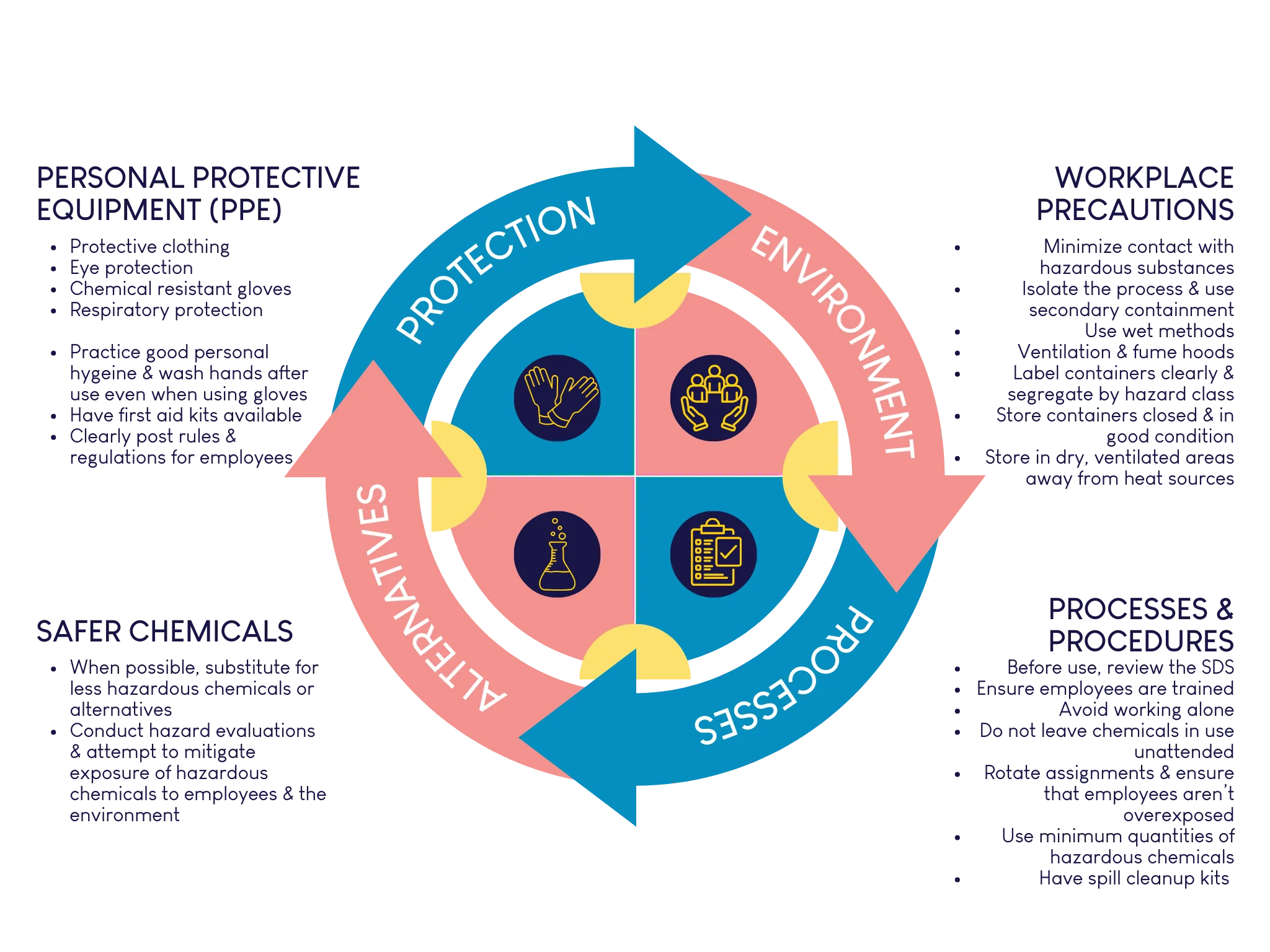
- Keep containers sealed, upright, and in good condition.
- Store chemicals in a dry, ventilated spot — away from heat and food.
- Group chemicals by type (flammables with flammables, acids with acids).
- Use secondary containment so one leak doesn’t turn into a disaster.
- Inspect storage areas regularly.
A little order saves a lot of chaos down the line.
Suit Up
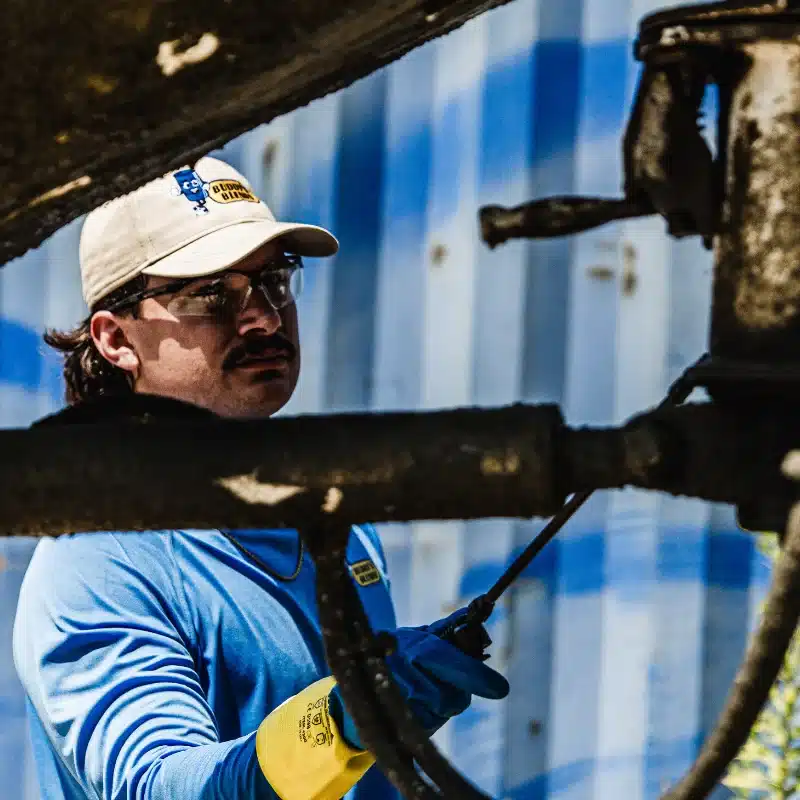
We’re not in middle school anymore, who cares how it looks. Put on that PPE (Personal Protective Equipment) – it’s your first line of defense.
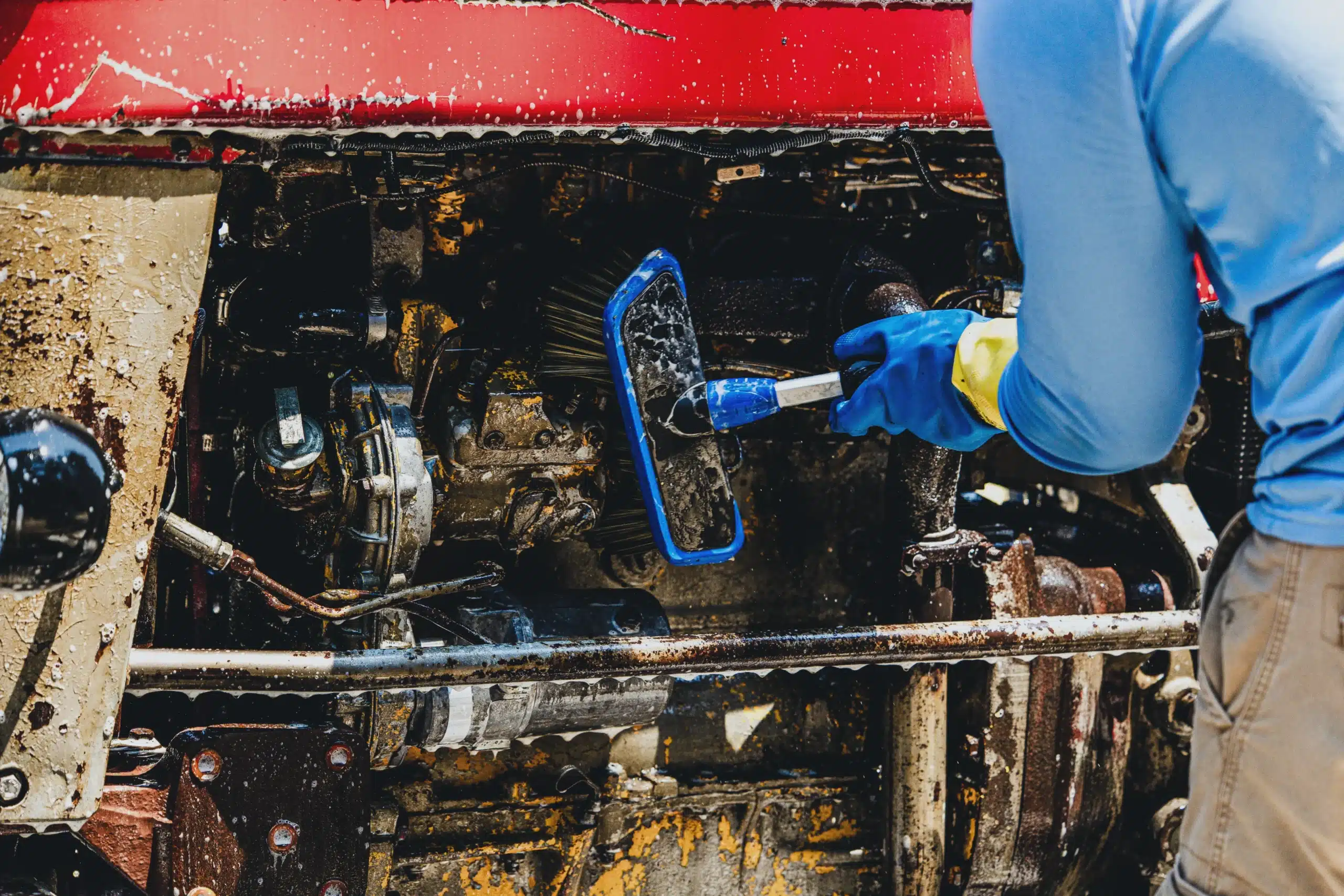
- Gloves: Use the right material — nitrile or neoprene beats thin latex.
- Face: Face shield over eye protection.
- Eye protection: Chemical-resistant goggles or glasses with side shields.
- Clothing: Chemical-resistant aprons or coveralls. Covered arms, long pants, and closed-toe, study work shoes.
- Respirators: When fumes or dust are in play, wear them — properly fitted.
If it’s uncomfortable, you’ll stop wearing it. So, get PPE that fits and works for your employees and suited for the job. See our in-depth post on chemical safety for guidelines on how to choose appropriate PPE.
Keep Your Head on Straight
Don’t guess at ratios. Always add acids/bases to water when mixing, not the other way around. Follow manufacturer instructions.
Don’t eat, drink, or smoke near chemicals. Keep children away.
Clean up spills right away and keep first-aid and eyewash stations close by.
If someone gets exposed — eyes, skin, or lungs — act fast and call for help.
Stay on Top of It
Make sure that everyone handling hazardous chemicals is properly trained, not just once, but regularly. Cover emergency procedures and make sure everyone knows what to do and who to call. Record everything you can from training to incidents to inspections. You’re not recording just to record, you’re showing that you care about your people.
Pivot if You Can
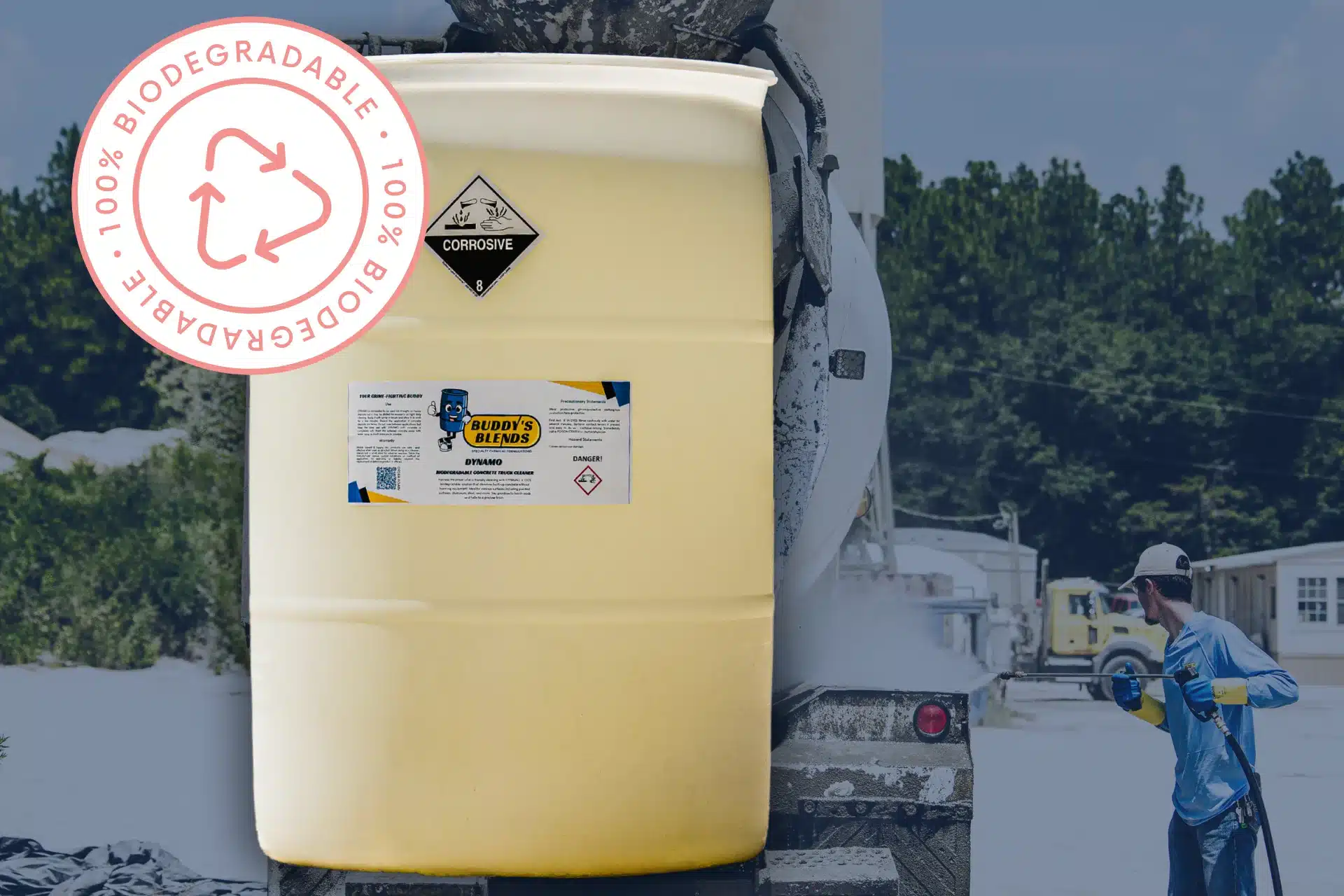
If you can switch out a hazardous chemical for a safer alternative, like a biodegradable or non-hazardous product, more power to you. It’s better for your crew’s safety and long-term health, for your local environment, and for minimizing the chance of any regulatory or legal trouble.
Bottom Line
Use common sense and show your employees that you care about them as people (they notice, I promise). The best operators don’t cut corners – they cut risk.